Art Therapy for Children
Art therapy and children – why is it effective?
Art therapy is a visual means of communication, highly suitable developmentally for children, especially when language is not yet developed enough to express the full complexity of emotions.
It is a therapy that children are naturally drawn to, allowing them to organize experiences in a non-threatening way. Through play and exploration, they can develop a unique path, independent thinking, and discover their identity.
They are able to give concrete form to their thoughts and inner feelings, recognize their abilities, receive space for experimentation and wonder to understand the world and its perception, as well as the opportunity to explore the question "who am I."
Goals of art therapy
The goal of therapy is for the child to feel good about themselves, even when there are frustrations. Art therapy allows coping with frustrations and successes.
It gives a good feeling when succeeding in creating, and the ability to bear frustration when not succeeding.
The therapy provides tools to fall and get up in a flexible way and find alternative, creative solutions to problems and conflicts. The properties of color that change, mix, and produce new colors also contribute to the experience of flexibility, movement, and embracing changes.
How does art therapy meet these goals?
The use of art materials and the therapist's guidance allow practicing flexibility of thought. All of these will enable the child in the future to cope with failure (which everyone encounters), find alternative solutions to problems, continue, persist, commit, and not avoid or get stuck in feelings of failure and the feeling that "I'm not worthy." In art therapy there is active involvement of the child, the joy of creation — drawing, cutting, gluing. The doing and action contributes to the possibility of being active (and can benefit children in a depressive state), as well as expressing anger through creation (sublimation), contributing to the ability to organize and plan, to a positive approach to learning, and to feelings of control, satisfaction, and calm. Art can also help understand body image. It is a space where one can take up space, see and be seen. Art therapy expands the ability to take risks, courage, and the ability to trust yourself. All of these help the child build high self-esteem and improve their ability for expression and interpersonal communication.
I personally respond to every inquiry within 24–48 hours.
 WhatsApp
How colors express emotion in children's drawings:
Examples from the book "Please Don't Disturb, I'm Drawing" pages 96-97:
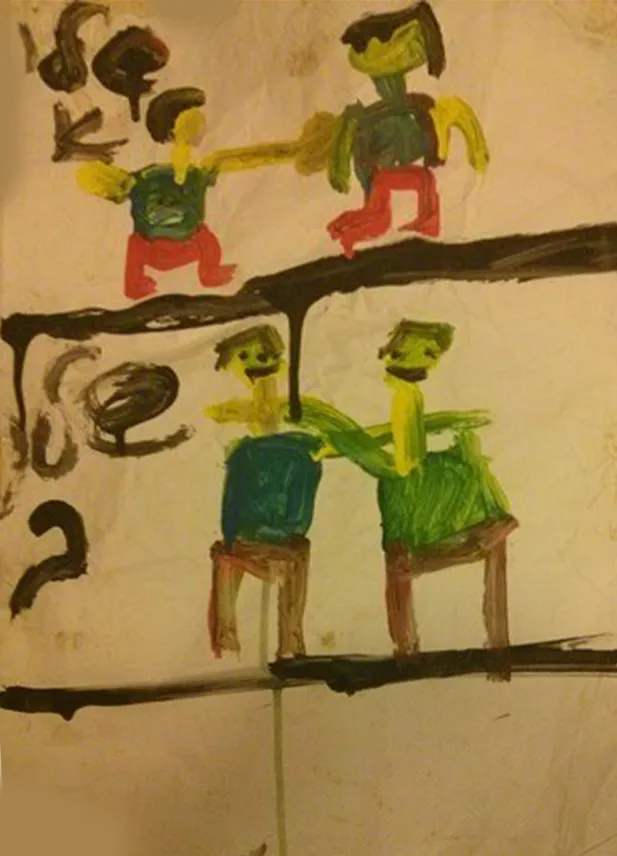
This is a drawing split in two by a boy of about ten, who hit a boy in his class, and a depiction of the reconciliation between the two children. You can see the different coloring. The legs colored in red expressing anger in the upper drawing, and the legs in brown expressing more calm and grounding in the lower drawing. In addition, the movement and eyes that were added express connection and emphasize the message of the transition from anger to calm.
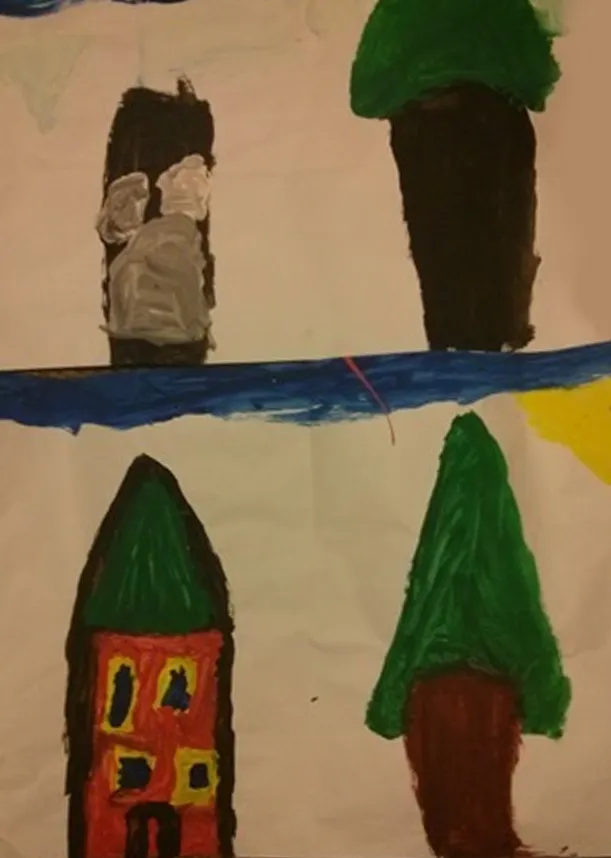
This is a drawing by an eight-year-old boy who arrived withdrawn and sad at the beginning of therapy and chose to paint in few and dark colors (upper drawing). Later in therapy, after several months, he chose more varied and brighter colors (lower drawing). These testified to his being calmer, more open, and happier.
The use of colors, then, is a wonderful and unique way to express different emotions, such as anger, sadness, vitality, flow, freedom, and joy. Colors can disturb, deter, arouse, calm, heal, embrace, and enchant. The experience of using colors is a highly meaningful gift for deepening the world of emotions.
More about art therapy
Art therapy is a unique and diverse tool, in which the art therapist provides space for the child with unique and diverse tools to learn and express their inner world, to understand "who am I" through experimentation and enjoyment, adapted to the developmental stage the child is at.
If the demonstration of how colors express emotion interested you,
- You're welcome to read more about the development of children's drawings in the book "Please Don't Disturb, I'm Drawing"
- You're welcome to read more about art therapy in the questions and answers about art therapy
- Or in the therapy demonstration.
For questions and consultation, feel free to contact me using the details at the bottom of the site.
Read More

Art Therapy
Art therapy is an emotional therapy in which one undergoes a process of growth, development, and awareness, with the help of art materials and the power of creation…
Therapy Demonstration
A demonstration of an art therapy process, step by step, accompanied by drawings and insights from the therapy room…
Art Therapy and Focusing
The Focusing approach is based on a process of listening to inner experience, paying attention to body sensations and images that arise…Want to know more?
I'd be happy to meet, answer questions, and help you get started.
Contact us for a consultation and appointment Focused depth meeting